Serving Huntsville, TX and nearby areasMon–Sat 8:00 AM – 6:00 PM · (936) 280-8706

Huntsville · Walker County · East Texas

Rodent Control in Huntsville, TX

Find how they got in. Get them out. Seal it for good.

Scratching in the attic, droppings behind the stove, a smell you can't place? Call one number for rodent control in Huntsville, TX and talk to a local rodent pro who can inspect your home, remove the rats, mice or squirrels, and seal the gaps they used.

Rodent Pros Huntsville is a free referral service. Your call is connected with an independent, experienced local rodent control provider. Open Monday–Saturday, 8:00 AM to 6:00 PM.

  • Rats, mice & squirrels
  • Huntsville + nearby towns
  • Mon–Sat 8–6
  • Ask for the TDA license
Illustration of a Huntsville, Texas home in the pines A brick house among East Texas pine trees at night, with glowing orange markers on common rodent entry points: the gable vent, a soffit gap at the roofline, a brick weep hole, an AC line gap and the crawl space vent. Common rodent entry points

Quick answers

What Huntsville homeowners ask first

Short, straight answers to the questions people type into Google at 11 PM while something runs across the ceiling.

Who do I call for rodent control in Huntsville, TX?

Call (936) 280-8706. You'll reach a local rodent control provider who works in Huntsville and the Walker County area. They ask what you're hearing or seeing, set up an inspection, and explain the plan before any work starts. Lines are open Monday to Saturday, 8 AM to 6 PM.
Is it rats, mice or squirrels?

Timing is the best clue. Rats and mice are most active after dark. Squirrels are active by day, so attic noise at sunrise and late afternoon usually means squirrels. Droppings help too: mouse droppings are rice-sized, while rat droppings are bigger, about the size of a raisin.

Why do rodents get worse here in fall?

When nights cool down in October and November, rats and mice move toward warm, dry spaces with food nearby. In Huntsville that often means attics under pine and oak shade, garages and crawl spaces. Heavy rain can also push them out of ground burrows and toward houses.

Are rodent droppings dangerous?

They can be. Rodent urine and droppings can carry germs, and the CDC warns that deer mice can spread hantavirus. Don't sweep or vacuum droppings, because that puts dust in the air. Wear gloves, wet the area with disinfectant first, and leave large or attic cleanups to a pro.

Will traps alone fix the problem?

Usually not for long. Traps take care of the rodents already inside, but new ones keep coming in through the same gaps. That's why good rodent control in Huntsville pairs trapping with exclusion: sealing vents, soffit gaps, weep holes and pipe openings with metal mesh, flashing and sealant.

How fast can someone come out?

It depends on the provider's schedule that day. Many providers can schedule within a day or two, and same-day visits are sometimes possible. If a rodent is loose in your living space, or you smell something dead, say so on the call so the visit can be prioritized.

Rodent control near you

Why Huntsville homes attract rats, mice and squirrels

Huntsville sits in the Piney Woods of East Texas, between the Sam Houston National Forest and the Trinity River side of Walker County. Tall pines, oaks and pecan trees grow right up to rooflines across town, from the older streets near Sam Houston State University to the wooded lots around Elkins Lake. That tree cover is great for shade. It also gives roof rats and squirrels a highway straight to your attic.

On the ground, many homes have brick veneer with open weep holes, pier-and-beam or raised foundations with crawl space vents, and detached sheds or barns on larger lots. Add bird feeders, pet food, pecans on the lawn and wood piles, and rodents have everything they need. Ground-living Norway rats and field rodents like the hispid cotton rat move in from pastures and creek bottoms, while house mice slip through gaps the width of a pencil.

Good rodent control in Huntsville starts with the house, not just the rodent. A local provider looks at where the activity is, finds the entry points, and builds the plan around them. For roof and attic activity, our rats in the attic and cleanup guide walks through what that visit looks like. If the noise is inside the walls or kitchen, start with the Huntsville mice exterminator page.

  • Serving all Huntsville ZIP codes: 77320, 77340, 77341, 77342, 77343, 77344, 77348 and 77349.
  • Nearby towns too: New Waverly, Riverside, Dodge, Willis, Trinity and other towns around Walker County.
  • Homes, rentals and small businesses, from student rentals near SHSU to rural properties off FM roads.
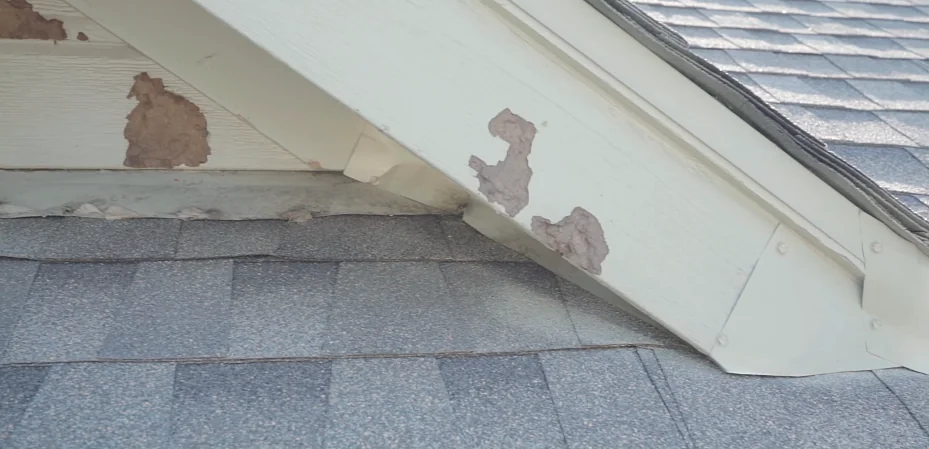
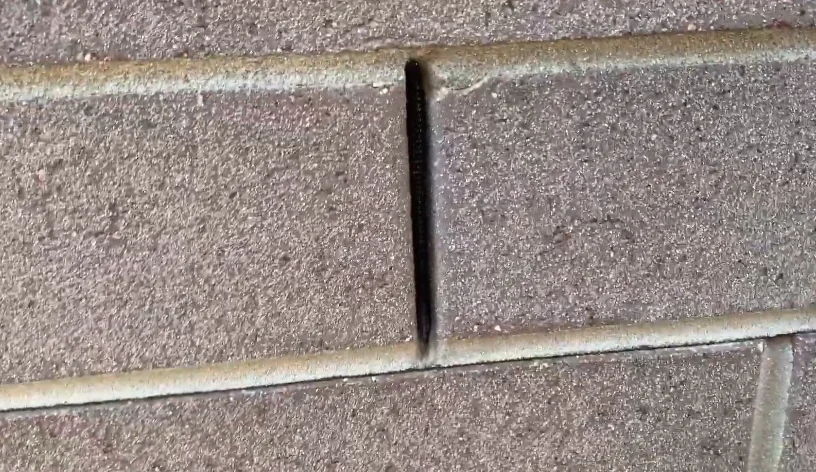
Gap where a lower roofline meets the wall, a common roof rat entry point Open weep hole in a brick wall that mice can use to get inside Damaged crawl space vent screen used by rodents to get under a house

Symptom checker

What are you noticing? Pick the closest match

Tap a sign to see what it usually means and which service fits. It's a starting point, not a diagnosis. The provider confirms it on the inspection.

How it works

From first call to a sealed-up house

Rodent Pros Huntsville connects you with an independent local provider; the provider does the inspection and the work. Here is what to expect.

  1. Call and describe it

    Tell the provider what you're hearing, seeing or smelling, where, and when it started. Photos of droppings or damage help a lot.

  2. Full inspection

    Attic, garage, crawl space and the outside of the house: roofline, vents, weep holes, pipe and AC line gaps. You get a clear picture of what's going on.

  3. Removal and sealing

    Trapping or one-way exclusion, based on the species, then sealing entry points with materials rodents can't chew through, like steel mesh and metal flashing.

  4. Clean-up and follow-up

    Droppings and soiled insulation are handled safely, and follow-up visits confirm the activity has stopped. Ask what's included before work begins.

Before you hire anyone

In Texas, companies that do structural pest control, including rodent work, are licensed by the Texas Department of Agriculture. Ask for the business license number and look it up on the TDA Structural Pest Control consumer page. Ask about insurance too.

Exclusion, explained

Sealing the gap is what keeps them out

Most repeat rodent problems in Huntsville come back to one thing: the way in was never closed.

Pest professionals generally treat any opening wider than about a quarter inch as a possible mouse entry and about half an inch as a possible rat entry. On a typical East Texas home that adds up to a long list: the joint where a lower roof meets a wall, soffit corners, gable and ridge vents, plumbing vent stacks, open weep holes in brick, AC and gas line penetrations, dryer vents, garage door corners and crawl space vents.

Exclusion work closes those openings with materials rodents can't chew: galvanized hardware cloth, steel mesh, sheet metal flashing, weep hole covers and exterior-grade sealant. Foam alone doesn't hold up, because rats chew straight through it. You can read more about materials and the inspection checklist in our rodent exclusion and proofing guide.

  • Roofline and soffit gaps closed with metal flashing or hardware cloth
  • Vents screened, not blocked, so the attic still breathes
  • Brick weep holes covered with breathable inserts
  • Utility and pipe gaps packed with steel mesh, then sealed
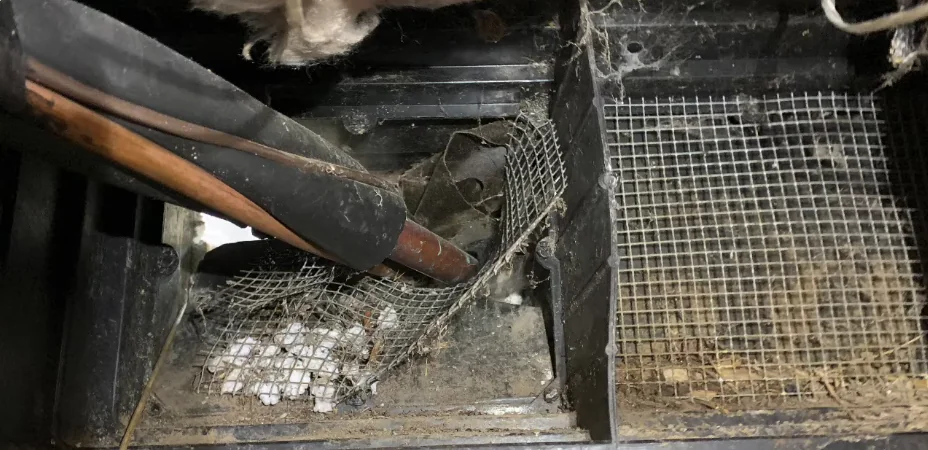
BeforeOpen gap at a roofline junction before exclusion work
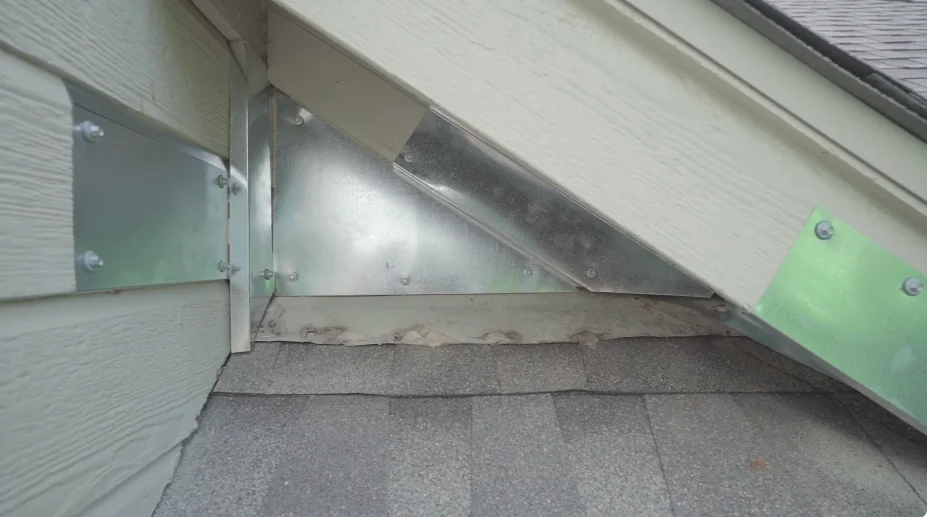
AfterThe same roofline junction sealed with metal flashing to stop roof rats
BeforeOpen weep hole in brick before it was covered
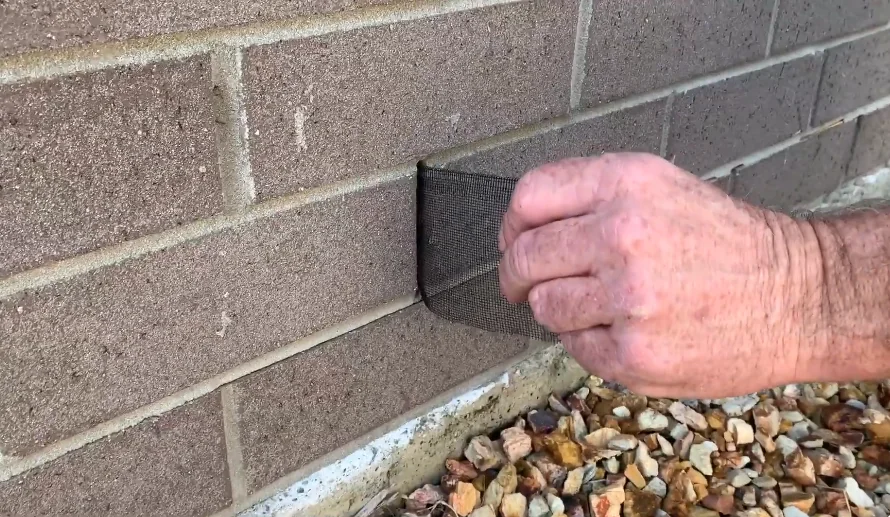
AfterWeep hole cover being pressed into a brick wall to block mice

Example photos showing what exclusion work typically looks like.

Know your rodent

The rodents behind most Huntsville calls

Each one behaves differently, so the right plan depends on which one you have.

Climber · attics

Roof rat

Also called the black rat. Slim, with a tail longer than its body. Travels along tree limbs, fences and utility lines, and nests high in attics and wall voids. Common across the Gulf Coast and East Texas, and drawn to fruit, pecans and bird seed.

Burrower · ground level

Norway rat

Heavier and stockier than a roof rat, with a shorter tail. Digs burrows along foundations, under slabs, sheds and wood piles, and gets in at ground level through crawl spaces, drains and garage doors.

Indoors · kitchens

House mouse

The most common rodent inside homes. Small, gray-brown, and able to squeeze through very small gaps. Nests in wall voids, cabinets, appliances and stored boxes, and leaves rice-sized droppings.

Rural · sheds & cabins

Deer mouse

Brown on top with a white belly and feet. More common in rural sheds, barns, cabins and garages than in town. The CDC lists it as the main carrier of hantavirus in North America, so cleanup needs extra care.

Fields · pastures

Hispid cotton rat

A coarse-furred field rodent found across Texas pastures, ditches and tall grass. It mostly stays outdoors but can move into barns, sheds and garages on rural lots, especially after mowing or heavy rain.

Daytime · roofline

Squirrels

Eastern gray and fox squirrels, plus the small, night-active southern flying squirrel. They chew into soffits and gable vents to nest in attics, especially in late winter and late summer when they raise young.

Huntsville weather & rodents

A year of rodent activity in Walker County

Huntsville gets around 51 inches of rain in a normal year and almost no snow, based on NOAA's 1991–2020 climate normals. Mild winters mean rodents stay active all year, with a few clear peaks.

Oct – Dec

Fall push indoors

The first cool nights send mice and rats toward attics, garages and walls. The first frost in Huntsville usually comes in late November. It's the time of year most homeowners first notice rodents.

Jan – Mar

Nesting season

Rodents settled inside keep breeding in warm attics. Squirrels look for nest sites in late winter. Last frost usually falls in late February, and activity stays steady.

Apr – Jun

Spring rain

Spring storms can flood burrows along creeks and low ground, which pushes Norway rats and field rodents toward higher, drier spots, including garages and crawl spaces.

Jul – Sep

Summer & storms

Fruit, pecans and gardens feed roof rats outside. Hurricane season (June 1 to November 30) can bring heavy rain inland. Late summer is a second squirrel nesting period.

Climate figures: NOAA NCEI U.S. Climate Normals, 1991–2020. Seasonal timing is typical, not exact.

Do this first

How to check your home for rodents in 15 minutes

You don't need special tools to figure out where the problem is. A flashlight, gloves and your phone camera are enough. This quick walk-through gives the provider a head start and helps you describe the problem clearly on the call.

  1. Listen at night. Spend a few quiet minutes after dark near the ceilings and walls where you heard noise. Note the time and the spot. Steady scratching or running after dark points to rats or mice; noise at sunrise and late afternoon points to squirrels.
  2. Check the kitchen and pantry. Look behind the stove and refrigerator, under the sink and along pantry shelves for droppings, chewed packaging and greasy rub marks along baseboards.
  3. Look into the attic from the hatch. With a flashlight, scan the insulation near the eaves and around ducts for tunnels, flattened trails, nesting material and droppings. Don't crawl in or disturb droppings.
  4. Walk the outside of the house. Check the roofline, soffits, gable vents, brick weep holes, AC and plumbing line gaps, the garage door corners and the crawl space vents for gaps, gnaw marks and dark rub marks.
  5. Photograph what you find and call. Take photos of droppings, gaps and damage without touching them, and share what you saw when you call.
Warning: don't sweep or vacuum droppings

Sweeping or vacuuming rodent droppings can stir up dust that carries germs. The CDC's hantavirus guidance says to air out the space, wear gloves, wet droppings with a disinfectant and let it soak before wiping up with paper towels. For attics, crawl spaces and heavy contamination, let a professional handle it.

Pro tip

Sprinkle a thin line of flour or talc along a baseboard where you suspect activity and check it the next morning. Tiny footprints and tail drag marks tell you rodents are using that path, and roughly how big they are.

What a provider looks for that most people miss

A trained eye picks up details that are easy to walk past: dark rub marks where rats squeeze around a pipe, gnawed edges on soffit vents, shredded insulation pulled into a nest, runways through attic insulation, and droppings on top of ductwork. They also check places homeowners rarely see, like the space above a garage ceiling, behind the dishwasher, and inside the crawl space along the sill plate.

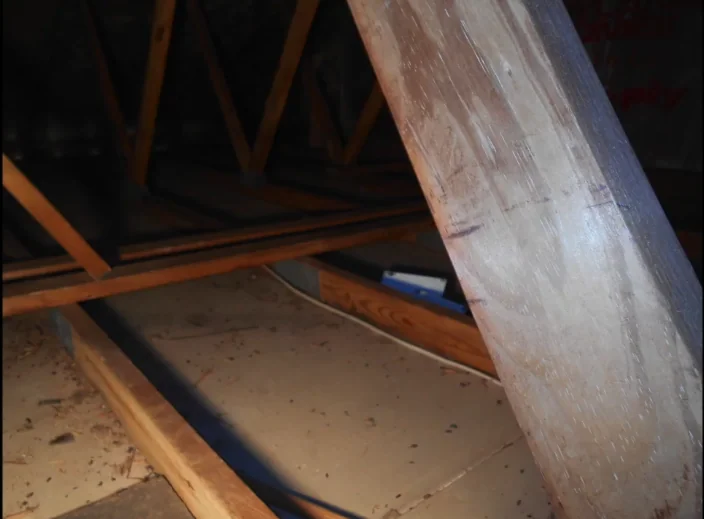
Attic floor with rodent droppings and damage before cleanup
Droppings and trails across an attic floor. Damage like this is why attic cleanup is often part of the job.
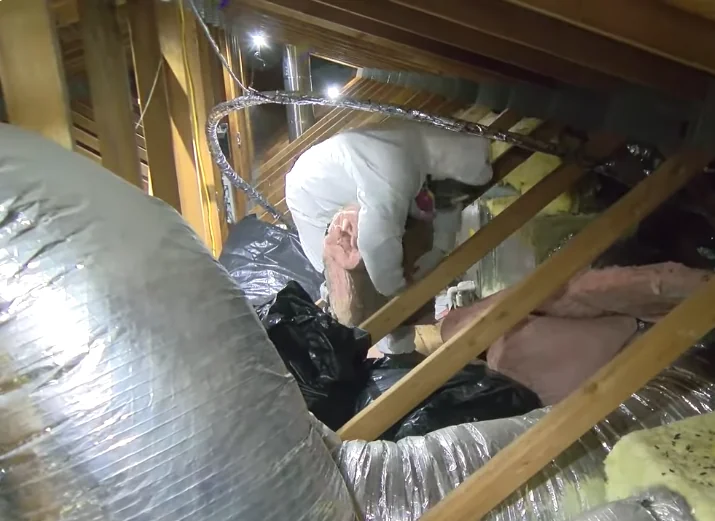
Technician in protective suit removing rodent-contaminated insulation from an attic Attic cleanup

After removal

Cleanup, insulation and odor: the part people forget

Once the rodents are out and the gaps are sealed, there's still the mess they left behind. Rats and mice leave droppings and urine in insulation, along ducts and on top of ceilings. Over time that soiled insulation loses its value and can hold odor that attracts the next rodent.

Depending on how much damage there is, cleanup can mean spot-removing droppings and nests, sanitizing the area, removing and bagging soiled insulation with HEPA vacuums, and blowing in new insulation. Chewed wires, flex ducts and vapor barriers may need repair too. Ask the provider to show you photos before and after, and to explain what parts of the cleanup are included.

If you're dealing with a smell rather than droppings, a dead rodent inside a wall or attic is the usual cause. The provider's job then is to find it, remove it and treat the odor, which our dead rat smell page covers in more detail.

Service area

Rodent control across Huntsville and nearby towns

Rodent help is available across Huntsville and the surrounding towns of Walker, Montgomery, Trinity and San Jacinto counties.

Area pages

Also serving

Not sure if your address is covered? Call and ask. If you live out toward Trinity and the Lake Livingston area, our Trinity rodent control page covers what's different about lake and rural properties out there.

Hire with confidence

Questions worth asking any rodent control provider

A good provider is happy to answer these. Clear answers up front save you surprises later.

  • What's your TDA license number? Then look it up yourself.
  • Which rodent do you think it is, and why? The answer changes the plan.
  • Which entry points will you seal, and with what? Ask for metal, not foam alone.
  • Do you trap, use one-way doors, or both? And how often are traps checked?
  • What's included in the quote? Inspection, removal, sealing, cleanup, follow-ups.
  • How do you keep kids and pets safe? Ask where any devices will be placed.
  • Will you show me photos? Before and after, especially in the attic.
  • What happens if activity continues? Ask about the follow-up policy in writing.

FAQ

Rodent control questions from Huntsville homeowners

How much does rodent control cost in Huntsville, TX?

Every home is different, so prices aren't listed on this site. The provider looks at your home first and then gives you a quote, and many local providers offer the inspection or estimate for free. Call (936) 280-8706 and ask what's included before you agree to anything.

Is there affordable or cheap rodent control near me?

The most affordable approach is usually acting early and fixing the cause. A small mouse problem caught in October is simpler than a full attic infestation in February. Sealing entry points once often costs less over time than paying for trapping again and again. Compare what each quote includes, not just the total.

Do I have to pay for a rodent inspection?

Many providers in the Huntsville area offer a free inspection or a free quote. Policies vary from company to company, so ask when you call and there won't be any surprises.

How long does it take to get rid of rats or mice?

A small mouse problem can be resolved in one to two weeks once entry points are sealed. Larger rat or attic infestations often take several weeks of trapping and follow-up visits. Sealing the house is what makes the result last.

Is rodent control safe for kids and pets?

It can be, when it's done carefully. Providers can use enclosed, tamper-resistant devices, place traps in areas kids and pets can't reach, and lean on exclusion rather than chemicals inside the home. Tell the provider about children, dogs, cats or backyard chickens so the plan fits your household.

Who is responsible for rodents in a Texas rental, the landlord or the tenant?

It often comes down to the lease and the cause. Under the Texas Property Code, landlords must repair conditions that materially affect a tenant's health or safety once they get proper notice. Report rodents to your landlord or property manager in writing and keep a copy. This is general information, not legal advice.

Can I get rid of rodents myself?

A single mouse in the garage is often a DIY job with snap traps and a sealed gap. Call a professional when you hear activity in the attic or walls, find lots of droppings, smell something dead, see rats in daylight, or keep catching mice week after week. Those signs mean there's an open entry point or an established nest.

Do you cover homes near Sam Houston State University?

Yes. Every Huntsville ZIP code is covered, including homes and rentals around SHSU and downtown. Student renters should loop in the landlord or property manager first.

What smell do rats hate? Will peppermint oil keep them away?

Peppermint oil, mothballs and ultrasonic plug-ins are popular, but none of them reliably keep rats or mice out of a house for long. Mothballs also aren't meant for use in living spaces. Removing food sources and sealing entry points works far better than any scent.

Ready when you are

Stop the scratching. Talk to a Huntsville rodent pro today.

(936) 280-8706

Open Monday–Saturday, 8:00 AM – 6:00 PM · Huntsville, TX and nearby towns